en English
Untitled English subtitles
Report a problem
Advertisement
English transcript
Once you were his friend, you never lost
him, nor he lost you.
He has never forgotten his boyhood
chums or family members.
Our neighborhood on Fifth South, we pretty well played
in the streets.
He was a bit of an athlete when he was a young fellow.
He played basketball.
But he was a self-starter, he didn't have to be told
everything.
He was 100% when he decided to do something.
When he was going to get my bottle ready, he would put the
milk in a little old pan on the stove that wobbled and
keep putting his finger in it to see that it was warm yet.
He'd pray an awful lot, and that was one thing that we
were aware of.
He'd pray for the food, he'd pray for things that happened.
And I noticed him, many times, he would take a hat off and
say a prayer, even when he was out on the stream fishing.
When President Monson was a very young bishop --
I think one of the youngest in the Church, he was
22 years old --
he obtained a Heinrich Kaufmann portrait of the
Savior, and he has had that picture of the Savior with him
everywhere he has ever gone since.
And it's still in his office today.
He loves the Master and he follows
the path of the Master.
He walks the path of the Master.
One of his favorite scriptures probably says it best, he is
always "on the Lord's errand."
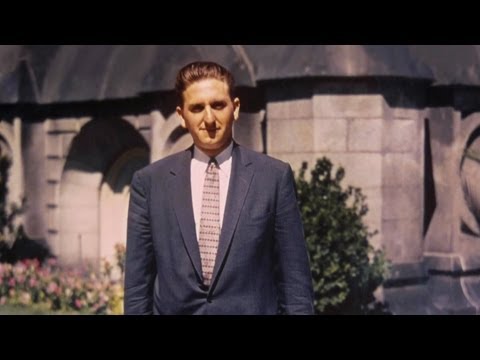
Thomas Spencer Monson was born on a Sunday morning, August
21, 1927, at the old Saint Mark's Hospital on Second
West, in Salt Lake City.
His parents, G. Spencer and Gladys Condie Monson, were of
hardy Swedish, English, and Scottish ancestry, and made a
loving home for Tom, his two brothers, and three sisters.
In 1927, there were just over 600,000 Latter Day Saints,
most of them living in the American West. Heber J. Grant
was President of the Church, and in three years the Church
would celebrate its 100th anniversary.
Tom grew up on Salt Lake City's west side, in the midst
of a close family of
grandparents, aunts, and uncles.
His grandfather, Thomas Sharp Condie, had purchased property
on the southwest corner of Fifth South and Second West,
built his own home there, and provided homes for each of his
four daughters and their husbands.
Tom was always welcome and totally at ease in any of
their homes, never feeling the need to knock.
My father did have an idyllic setting as he grew up.
He loved his relatives and everything that
they did for him.
His aunts and uncles.
It was as though he was their son as well.
His mother and father were very good people.
We loved them both.
They loved the Gospel and they have
taught it to their children.
My mother was a friendly, outgoing person.
She would talk to people on the bus.
She made friends instantly.
Being around Gladys, you know, it was what you
call a hoot, I guess.
People say, Gladys, how did you raise a son
to become an apostle?
And she'd smile and, with her own sense of humor, say, well
it wasn't easy, but I persevered.
My father was a hard worker, he worked 12 hours a day, six
days a week.
He was the provider.
He put the money aside so that we could have an education.
Sunday was my father's only day off.
I'm sure he would've enjoyed relaxing at home, but
invariably he would say, come along Tommy, let's take Uncle
Elias for a drive.
Bored in the old 1928 Oldsmobile, we would proceed
to Eighth West, to the home of Uncle Elias and Aunt
'Tine,
I would be waiting in the car while dad went inside.
Soon he would emerge from the house, carrying his crippled
uncle in his arms like a little china doll.
I would open the door and watch how tenderly my father
would place Uncle Elias in the front seat.
Then we'd take him for a ride around the city.
Dad never wanted any thanks for this service, but his
lesson was not lost on me.
For generations, Tom's family had spent each summer at a
small cabin in Vivian Park, in Provo Canyon.
There, along the banks of the Provo River, Tom first gained
from his uncles what would become a
lifelong love for fishing.
"I would sit on the bank for hours, " Tom recalled, "and
look at the mountainside across the river.
Those were happy years.
Dream-filled years."
One summer afternoon, 12-year-old Tom was floating
on a tractor-tire inner tube down the river, towards its
swiftest part, when he heard the frantic cries of a Greek
immigrant family from the bank.
Just ahead in the whirlpools, a young lady swimmer was
disappearing under the water for the third time.
And the girl's head emerged, and I grabbed
her by the hair --
she would be about 14, I suppose -- and pulled her
across my lap, in that inner tube.
And while she cried and was spitting water, I took the
other hand and paddled her through the whirlpool and into
the little eddy and up to the bank, and then handed her to
her parents.
They threw their arms around her, weeping and kissing.
Then they grabbed me, they hugged and kissed me.
I was embarrassed.
You know, no boy wants to be kissed by a lot of
older men and women.
So I quickly returned to my tube and
continued down the river.
As he thought about what had happened, "I realized," he
said, "I have participated in saving a human life.
Heavenly Father had permitted me, a deacon, to float at
precisely the time I was needed.
That day, I learned that God, our Heavenly Father, knows
each one of us and permits us to share His divine power to
save."
At age 16, Tom was expected to forego swimming and fishing in
the Provo River and work full-time during the summer.
He got a job at Burton Lumber and Hardware Company,
unloading boxcars of cut lumber in 100-degree
temperatures.
At this time, America had entered World War II and US
combat efforts were not going well overseas.
It was during this bleak time that stake patriarch Frank
Woodbury placed his hands on 16-year-old Tom Monson's head
and conferred a truly
prophetic patriarchal blessing.
"You shall be indeed a leader among your fellows," the
patriarch said.
"Seek the Lord in humility to guide and direct you in the
high and holy callings unto which you shall be called."
In 1944, Tom enrolled as a freshman at the
University of Utah.
Shortly after, at a university dance, Tom first saw the young
lady who would become his wife.
Tom had taken a girl from West High and they were dancing to
the popular song "Kentucky," when Frances Johnson and
another young man danced by.
"I caught a glimpse of her," Tom said, but he didn't see
her again that evening.
About a month later, while waiting for the street car at
13th East and Second South, he saw Frances and another girl
standing together.
They were with a grade school acquaintance of Tom's named
Paul Wilkinson.
Tom walked up to Paul and said, "Hello, old friend, how
are you?" It worked.
"As I said goodbye," Tom recalls, "I quickly took out
my student directory and underlined the name Frances
Beverly Johnson." That evening, Tom called her and
arranged their first date.
As my mother was contemplating, is this really
the man that I want to marry?
It was cute as my mother shared with me how her mother
said, you look at the way Tom takes care of his grandfather.
Because my father did love his grandfather, and he would
shave him and he would get his clothes ready.
Any man that takes care of his grandfather the way Tom takes
care of his grandfather will be a wonderful husband.
And that became a big selling point in my father's favor.
Tom and Frances' first date was to a dance at the
Pioneer stake gym.
More dates followed.
But as spring turned to summer in 1945, Tom realized his days
as a civilian were numbered.
On October 6, 1945 Tom went to the train depot in Salt Lake
City to ship out for basic training in San Diego as a
member of the United States Naval Reserve.
Among those saying goodbye was John Burt, a member of the
bishopric who handed Tom a copy of
the Missionary Handbook.
"I'm not going to mission," Tom protested.
"Take it along, " Brother Burt said.
"It may come in handy."
Upon arriving in San Diego, Tom had his first taste of
military life.
"The naval base seemed to stretch
for miles," Tom recalled.
"I'm convinced the training was designed to toughen us, as
well as humble us.
It succeeded."
One night, before returning home for Christmas leave, Tom
and his fellow sailors were lying on their
bunks, nearly asleep.
Suddenly a man in a nearby bunk, Leland Merrill from
Murray, Utah, said, "I'm sick.
I'm sicker than I've ever been." Tom suggested he go to
the dispensary and have a doctor look at him.
Merrill said he would be kept for observation and not
allowed home for Christmas.
The moans increased.
Finally, Merrill said, "Monson, aren't you an elder?"
The time was 2:00 AM.
Tom had indeed been ordained an elder prior to
enlisting in the Navy.
Merrill said, "Will you give me a blessing?"
I thought to myself, I've never given a blessing.
I've never received a blessing.
I don't know that I've ever seen
anyone receive a blessing.
And then I remembered, I've got something in that sea bag
that might help me.
And I dumped the gear on the deck and took out that
Missionary Handbook.
And I went into the cubicle where the night light was
shining and I read how you administer to the sick.
And then I went back there and gave him a blessing.
And when I said amen, he was purring like a
kitten, sound asleep.
The next morning, as we assembled to the march off to
get on the buses to go home for home leave, Leland Merrill
said, "Monson, I'm glad you hold the priesthood." And I
said, "I'm glad I do, too."
I was just very grateful for the priesthood and to have
friends that were watching out for me.
I guess it must have made quite an impression on Tom
because he's remembered it all these years, and so have I.
In 1946, the war had ended and Tom returned home.
Two years later, he graduated with honors from the
University of Utah, with a degree in Business.
Turning down job offers from Standard Oil of California and
Procter & Gamble on the east coast, he chose to work for
the Deseret News as assistant
classified advertising manager.
In the meantime, Tom and Frances' relationship had
grown and deepened.
Finally, Tom went to Davis Jewelry and selected a the
diamond engagement ring to surprise Frances.
After hiding it at home, he carefully
planned a special evening.
On the night he determined to become engaged, Tom brought
Frances to the house.
As soon as she entered, Tom's youngest brother Scott blurted
out, "Tommy has a ring for you, Frances." "I was very
irritated to have my surprise exposed," Tom remembers.
Tom and Frances were married in the Salt Lake Temple for
time and eternity on October 7, 1948.
Thus began one of the truly exemplary
marriages in the Church.
My mother is the other part of my father's success story,
because she's been supportive of him in
everything that he has done.
Since the first day of our marriage, it was just a
wonderful experience.
We didn't question whether we feel unhappy that he was gone
all the time or working so hard.
So we just sort of grew up with that.
We still do.
The wife of a member of a bishopric or a stake
presidency has a little different life than others.
You're away from them a lot to meetings.
And some social events have to be foregone because of a
meeting here or a blessing to be given there.
But I have never, in our entire marriage, have heard
her complain.
Anything I had to do in the Church, she
always sustained me.
At the time of their marriage, Tom was serving as the
Sixth-Seventh Ward clerk.
One morning, he sat silently taking minutes while the
bishopric discussed the lack of success with the young
people in their ward.
Presently, the young clerk said, "Excuse me brethren, but
may I say something about the MIA and the youth challenges
in this ward?"
He then delivered a profound summary of not only what was
wrong with the youth program, but what could
quickly make it right.
Then realizing he may have been presumptuous, he said,
"Forgive me, I think I've said too much," and excused himself
to take role in the elders quorum.
He was no sooner out the door than the bishopric looked at
each other and said, what are we waiting for?
They immediately called him back, released him as ward
clerk, and called him to be the superintendent of the MIA.
Within months, the Sixth-Seventh Ward youth
program, with its committed young superintendent, was
drawing more people to MIA than sacrament meeting.
The Lord prepares his leaders when they're young.
And if there was ever a good example of that, it's with
Thomas S. Monson.
He was always different from the rest of us.
I believe he was a born leader.
He had energy that is beyond belief, and enthusiasm that
was just contagious.
He has a presence, when he walks into the room, that
people look up to him -- because he is a big man, and
they do look up to him --
but they look to him for guidance in every situation.
It wasn't long before the new MIA superintendent was called
by Bishop John Burt to serve as his Second
Counselor in the bishopric.
When Bishop Burt was called a few weeks later to serve in
the Temple View stake presidency, Tom was certain
that a ward member serving on the high council would be
Bishop Burt's successor.
"To my amazement," Tom said, "the call came to me."
Here he was, 22 and 1/2 years old, serving a ward which had
more than 1,000 members, including 85 widows, and one
of the largest welfare loads in the entire Church.
Bishop Monson chose men much senior to himself as
counselors.
"We were installed on Sunday, May 7, 1950, a fast day," Tom
remembers, "and immediately set to work." The old
Sixth-Seventh ward chapel had begun refurbishment under the
previous bishopric with the painting of its exterior.
Bishop Monson followed this with extensive interior
renovation, including the installation of new benches.
Ward members gladly provided the labor.
Tom remembers, "With the redecoration of the building
and the rejuvenation of spirit, the ward literally
came alive.
Sacrament meeting attendance doubled, then quadrupled,
completely filling the building.
A large part of the congregation was elderly.
"I had a love for the older people," Tom said.
"These were good people who loved the Lord and kept his
commandments." Even after his release as bishop, Thomas
Monson continued to take a gift and visit every one of
the 85 widows of the ward, every Christmas, for as long
as each lived.
It's interesting that he has been able to speak in every
funeral for those 85 widows.
That's an almost impossible feat, given our travel, given
our committee assignments, the other things that come in the
life of a general authority.
But with the hand of the Lord upon him, he was able to do
that for each of those widows who had so requested it.
On a winter night in 1951, young Bishop Monson responded
to a knock at his door.
A German Church member from Ogden announced his family was
coming from Germany and would live in the
Sixth-Seventh Ward.
He asked if the bishop would go with him to survey the
apartment he had rented for them.
On their way, the visitor, Karl Guertler, told Bishop
Monson that he had not seen his brother
Hans for many years.
Arriving at the corner of Fourth South and Second West,
the two ascended a staircase.
"It isn't much," brother Guertler said, "but it's more
than they've had in Germany." As Bishop Monson surveyed the
cold, uninviting apartment, he recalls, "I was heartsick.
I thought, what a dismal welcome for a family that has
endured so much." Tom did not sleep well that night.
The next morning, in ward welfare committee meeting, one
of his counselors asked, "Bishop, is something wrong?"
And I told the committee members of my experience.
It was as though the spirit of the Lord just enveloped us.
And they said, what can we do about that, bishop?
Edward Eardley, the group leader of the high priests,
spoke up and said, I'm a master electrician and I have
three helpers.
We'd like to rewire that place.
And I have contacts with those who sell refrigerators and
those who sell stoves, and I'll get one donated.
A new one of each one of those.
And then another person spoke up, namely a painter,
contractor, brother Bowden.
He said, I'm a contractor for painting and I can get my
paint less than wholesale.
And my crew and I will paint the house.
And then that wonderful relief society president said, relief
society women do not like empty cupboard shelves.
We will fill them.
And we went about doing that, we had two weeks to do it.
The night the Guertlers came, they showed the appearance of
someone who'd shed many tears.
And all the way up the staircase to the second floor,
I remember brother Guertler saying, now it isn't much,
Hans, it isn't much.
But it's the best we could do, it's the best we could do.
And then they opened the door.
Talk about a vision.
There was a nice carpet, laid by my counselor who was a
contractor for carpet laying.
And then there was the wallpaper, all nice and new,
and the painting nice.
There was the Christmas tree, all decorated.
Absolutely everything anyone would need.
I was 15.
I was a very insecure teenager.
We had not had a real home since before the war, when our
apartment building was bombed.
So we always had to double up with other families.
And to walk into an apartment and to know it would be ours
was just beyond comprehension to us.
It was like a shock.
I couldn't believe it.
He put the key in front of me and said, you
are in your own apartment.
As we left and our little band who'd done all this work came
out onto the street, they were silent.
And they said, why is it that this will be the best
Christmas we've ever experienced?
I said, do you remember the final verse of "Little Town of
Bethlehem?" "No ear may hear His coming, but in this world
of sin, where meek souls will receive Him yet, the dear
Christ enters in." He entered into the apartment, he entered
into the lives of all who were part of that experience.
As Bishop Monson matured in his responsibilities, he
learned many lessons.
Among them, the importance of following the Spirit and
trusting in the Lord.
One night, during a state priesthood leadership meeting,
he had the distinct impression that he should leave the
meeting immediately and drive to the Veterans Hospital, high
on the avenues of Salt Lake City.
Before leaving home that night, he had received a phone
call informing him that an older member of his ward was
ill and had been admitted to the hospital for care.
Could the bishop, the caller asked, find a moment to go by
the hospital and give a blessing?
The busy young bishop explained he was just on his
way to a meeting, but he would certainly go by the hospital
afterwards.
Now the prompting was stronger than ever.
Leave the meeting and proceed to the hospital at once.
Bishop Monson looked at the pulpit.
The stake president was speaking.
He didn't see how he could stand in the middle of his
talk and make his way over an entire row of men.
Painfully, he waited out the final moments of the stake
president's message, then bolted for the door, even
before the benediction was announced.
Running the full length of the corridor on the fourth floor
of the hospital, the young bishop saw a flurry of
activity outside the designated room.
A nurse stopped and said, "Are you Bishop
Monson?" "Yes," he replied.
"I'm sorry," she said.
"The patient was calling your name just before he died."
Fighting back tears, Bishop Monson walked
back into the night.
He vowed at that moment that he would never fail to act
upon a prompting from the Lord.
He would immediately follow the impressions of the Spirit,
wherever they led him.
No one can understand President Thomas S. Monson who
does not understand the frequency, the repetition, of
those kinds of spiritual promptings in his life, and
his absolute loyalty in responding to them.
When I was called as a bishop, I recognized I was the
president under the priest corps and I wanted to get
every boy out.
There's one boy that never came.
And I thought to myself, I'm sitting here with the priests,
they've got an adviser.
I'll leave them to get the lesson from the adviser.
I'm going to go find Richard Casto.
And I went over to his home.
Mother and dad
…